

The moving truck is parked, the rooms are full of taped cardboard, and it’s sub-zero outside. You don’t need your complete cookware collection, holiday decorations, or library right now. You need a hot shower, a charged phone, and a warm, made bed.
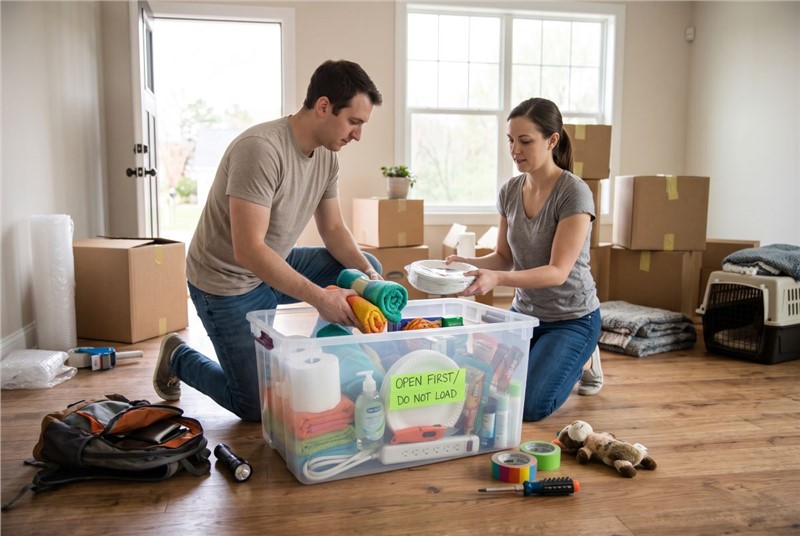
That is where the "Open First" moving box comes in. By packing a dedicated first-night survival container, you eliminate the late-night hunt through dozens of identical brown cartons.
Step 1: Secure the Right Container
Before tossing in supplies, pick the proper carrier:
Go with clear, heavy-duty plastic: Ditch traditional cardboard for a durable, latching 60-quart transparent storage bin. Plastic protects your gear from snow, ice, and road grime, while the clear sides let you locate a phone cord or utility knife without popping the lid.
Label high and bright: If you must use a cardboard box, outline all six sides with bright orange or neon tape and write "OPEN FIRST — DO NOT LOAD ON TRUCK" in permanent marker.
Keep it off the van: Keep this bin in the cab or trunk of your personal vehicle. If it has to ride on the truck, coordinate with your movers to ensure it is the last item placed at the tailgate so it comes off first.
Step 2: Pack by Immediate Need
| Priority Category | What Goes Inside | Why It Matters |
| Immediate Access & Entry | Box cutter, multi-bit screwdriver, flashlight/headlamp, work gloves, contractor bags | You cannot unpack anything without a blade, and headlamps keep your hands free if power is delayed or outdoor lights are out. |
| Warmth & Sleep Setup | Clean flannel sheets, pillows, down duvet or heavy quilt, thermal sleepwear, earplugs | After a taxing moving day, setting up a warm, comfortable bed is essential for recovering energy. |
| Personal Hygiene | Bath towels, shampoo/soap, toothbrushes, toothpaste, 2 rolls of toilet paper, shower curtain & rings | Never assume a newly purchased or rented property has toilet paper or shower protection in place. |
| Hydration & Quick Fuel | Reusable water bottles, gallon jug of water, coffee maker/kettle, mugs, protein bars, jerky | You will need rapid hydration and hassle-free morning coffee before local kitchen appliances are organized. |
| Emergency & Electronics | Prescription medications, mini first-aid kit, phone chargers, portable power bank, pet dishes/food | Keeps essential medical regimens and communication lines active without rummaging through packed cartons. |
Step 3: Coordinate with Your Moving Team
A stress-free arrival relies on clear communication during loading and transit:
Moving within Alaska? If you are transitioning locally across Anchorage, Fairbanks, or the Mat-Su Valley, work directly with our local crew at Allied Alaska residential movers. Inform our team which items stay in your private vehicle so essential bins are never mixed into the primary cargo haul.
Relocating to the Lower 48? Long-haul shipments often encounter extended travel times, seasonal ferry schedules, or highway delays. For cross-country relocations, team up with our experienced long-distance moving specialists. We’ll coordinate timeline expectations so you can pack an expanded survival kit designed to sustain your family across travel days.
Step 4: Add Individual "Day-One" Backpacks
Complement your main household container by assigning each family member a personal backpack containing:
A complete change of seasonal clothing and warm layers.
Personal electronics, tablets, and charging cables.
A favorite blanket, bedtime book, or comfort toy for children.
Vital personal documents (IDs, leases, closing contracts, moving inventory forms).
Taking an hour to pack your survival kit turns move-in night from a stressful scavenger hunt into an organized, relaxing milestone. When planning your next relocation, contact Allied Alaska to receive a free estimate and let our local professionals handle the heavy lifting.




Comments