

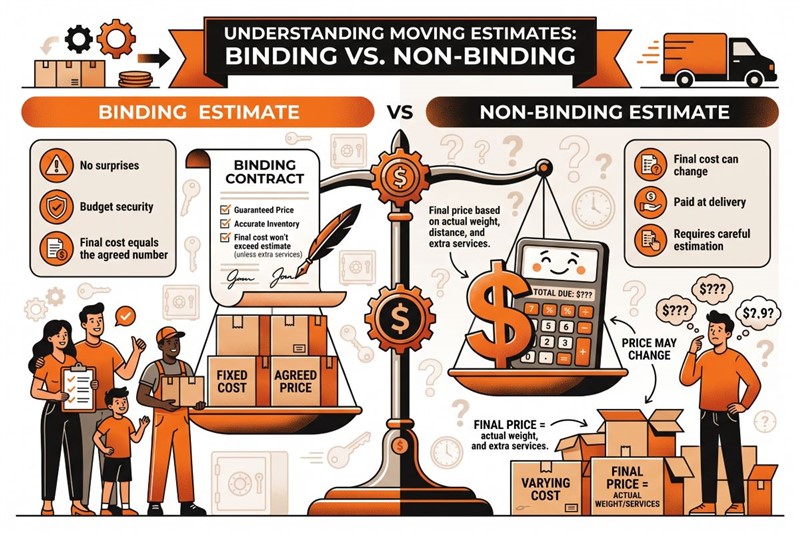
Moving companies generally offer two primary pricing structures—binding and non-binding—alongside a hybrid approach known as binding-not-to-exceed. Breaking down how each option operates allows you to select the best fit for your budget.
1. How Binding Estimates Function
Under a binding estimate, you and the moving company sign a legal agreement locking in a flat price for the entire relocation. This figure is calculated using the estimated total weight of your items and the specific extra services you request.
Guaranteed Cost: Regardless of whether the truck turns out heavier or lighter on the scale, the amount written on your agreement remains the exact price you pay.
Strict Inventory Rules: Because the locked-in price relies entirely on the initial visual survey, adding extra boxes or unlisted furniture on moving day gives the mover the right to adjust the contract or cancel the binding agreement.
Upfront Settlement: Payment for the agreed sum is required prior to the crew unloading your possessions at the destination.
Key Advantage: Unmatched predictability that protects you from weight-related price spikes.
Key Drawback: Zero financial savings if your belongings end up weighing less than predicted.
2. How Non-Binding Estimates Function
Unlike fixed quotes, a non-binding estimate serves merely as an educated projection of your potential expenses. Rather than paying a set price, your final charges depend entirely on the actual scaled weight of your shipment, combined with any applicable hourly or labor fees.
Variable Billing: Flexibility defines this structure. Scaling below the estimated weight lowers your final bill, whereas exceeding the projected weight raises your total cost.
The Federal 110% Cap: For interstate relocations within the United States, federal law prevents movers from demanding more than 110% of the initial non-binding quote upon delivery. Any remaining balance exceeding that 110% threshold gets billed to you with a 30-day grace period for payment.
Budgetary Risk: Price fluctuations remain a distinct possibility, making financial planning more unpredictable.
Key Advantage: Opportunities to lower your costs by decluttering or downsizing before the truck arrives.
Key Drawback: Heightened risk of unexpected cost increases if the initial weight was underestimated.
3. The Hybrid Choice: Binding Not-to-Exceed Quotes
When available, a Binding Not-to-Exceed estimate (frequently called a "Guaranteed Maximum" quote) provides the strongest level of consumer protection.
This hybrid model combines the benefits of both traditional formats:
Should your total weight go over the original projection, your price stays capped at the maximum figure listed in your contract.
Should your total weight come in under the projection, your bill drops to reflect the actual lighter weight.
Contact the professional movers at Allied Alaska and schedule a free in-home written moving cost estimate for your long distance move. Give us a call or fill out our online quote form.




Comments